
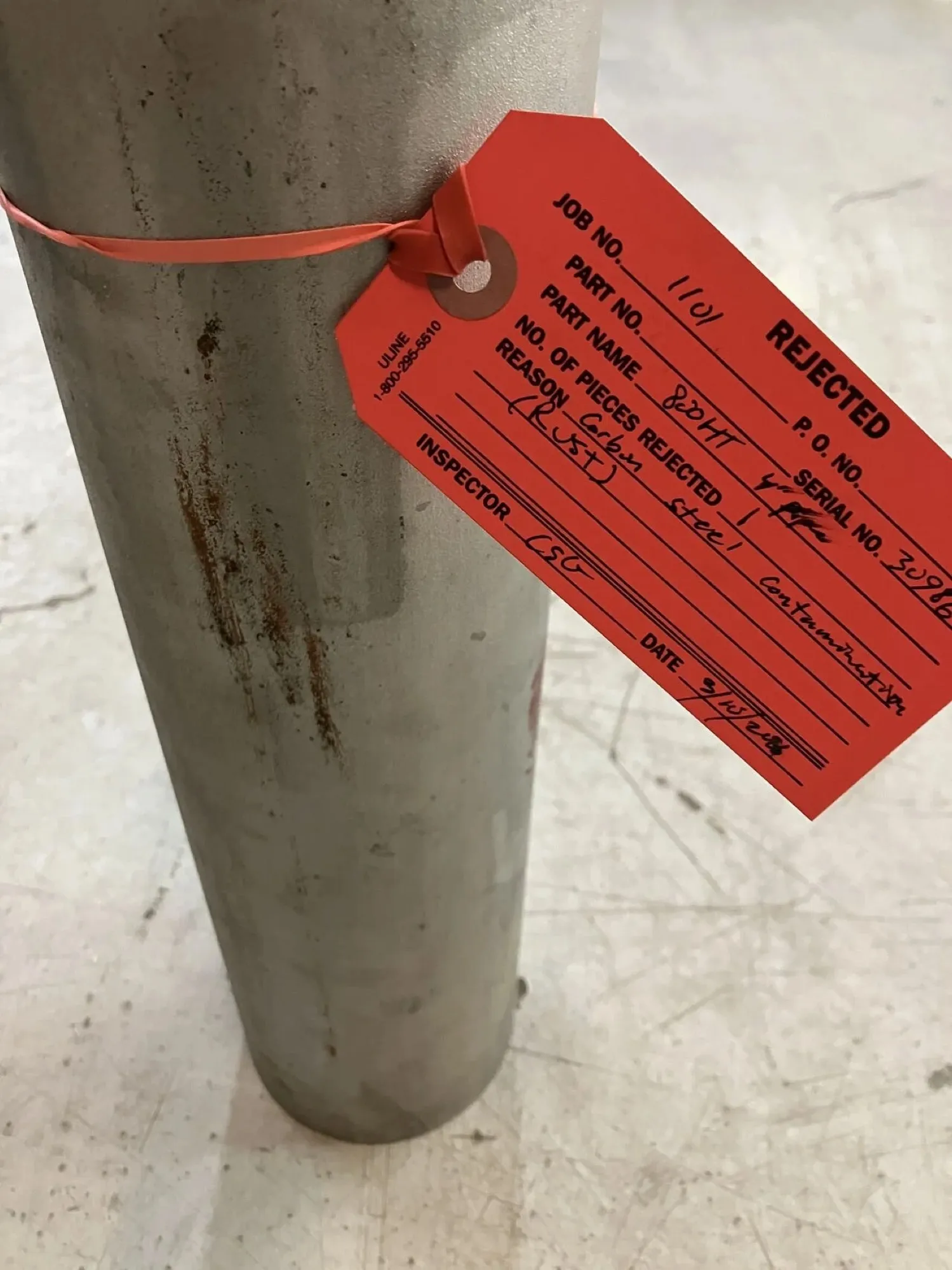
When corrosion shows up in service, we tend to look at operating conditions first: temperature, environment, process chemistry. But in many cases, the real problem started much earlier, in the fabrication shop.
I was recently reminded of this seeing 800HT rejected due to surface rust. A high-performance alloy, compromised before it ever saw service conditions. These are the most common contamination sources during fabrication:
- Carbon steel tooling and fixturesContact with carbon steel vises, lathe chucks, or work surfaces can embed iron particles into the alloy surface, creating initiation sites for rust.Use non-ferrous or protected tooling and fixtures.
- Poor welding controlExcessive heat input or inadequate shielding gas can damage the passive layer through alloy depletion and oxidation.Follow a qualified WPS, train welders, measure purge quality and heat input, and perform post-weld NDE.
- Grinding dustGrinding sparks and dust travel farther than most expect, and can contaminate nearby materials.Separate grinding areas, install spark containment, and use ventilation that prevents cross-contamination.
- Abrasive cross-contaminationGrinding discs, Scotch-Brite pads, and files used on carbon steel can transfer embedded particles.Use dedicated consumables per alloy, store them separately, and label everything.
- Improper storage and handlingSteel racks, forklift forks, and even damaged pallets can introduce contamination.Isolate materials from carbon steel and use protective barriers.
- Chemical contaminationSulfur-bearing cutting fluids, high-chloride water, and even certain markers can initiate corrosion.Use approved cutting fluids, DI or low-chloride water, and compatible marking tools.
None of these issues seem catastrophic on their own. Together, they can quietly undermine the corrosion resistance the alloy was selected for in the first place.
Fabrication quality is corrosion performance.