
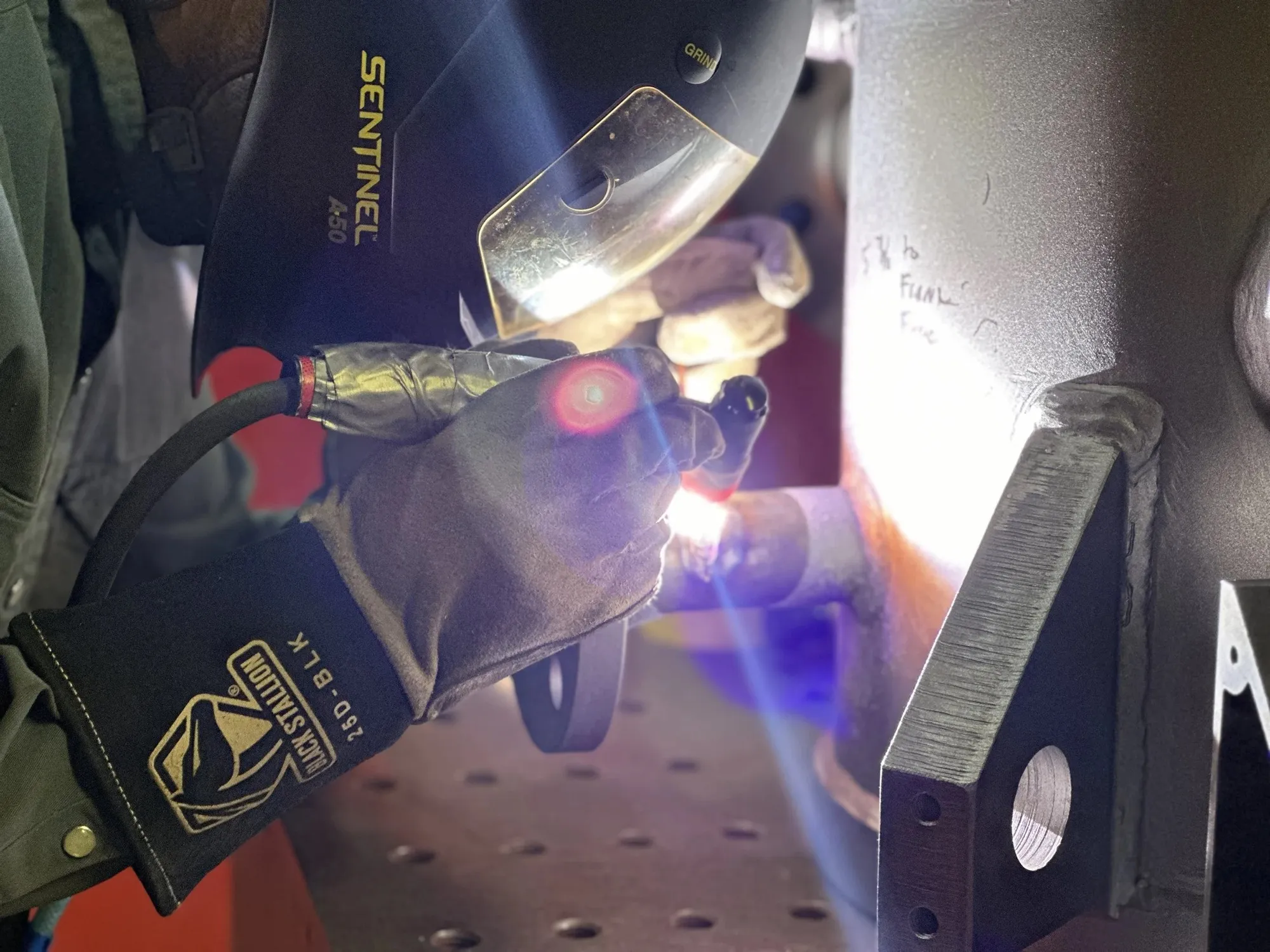
A welding certification often means that a welder passed a specific test at a single point in time, under controlled conditions, covering a narrow range of variables. Despite this, many shops present "certified" status as if it guarantees broad capability across all projects and conditions.
There is a significant difference between holding a certification and operating as a true code-compliant welding shop. Shops that consistently deliver compliant work go far beyond a one-time test. They maintain:
- A deep understanding of both technical and administrative code requirements
- In-house non-destructive testing (NDT) capabilities
- Ongoing welder training and qualification programs
- Full material and filler metal traceability
- Documented procedures and strict process control
- Subcontractor qualification, audits, and agreements
In short, they have repeatable systems that ensure weld quality, compliance, and documentation every single time.
A real-world case
We were recently called in to rebuild a piping system after a previous contractor's welds failed inspection. The bigger issue: they could not provide documentation for the welds, the welding procedures used, or welder qualifications.
We performed the rebuild on-site, with all welds inspected to ASME B31.3, including visual inspection and magnetic particle testing by a certified third-party inspection company. To stay ahead of delays, we also ran in-house borescope and dye penetrant testing before third-party inspection.
The takeaway
Certification alone does not guarantee quality or compliance. What matters is whether a shop has the systems, discipline, and documentation to consistently deliver code-compliant work.
If your project depends on weld integrity, evaluate the process behind the certificate.